
Most clients never check the things that actually matter for nail salon safety. They walk in, sit down, and trust that everything is sanitary. Sometimes it is. Sometimes it isn't. Below are seven red flags every Kissimmee client should know about, from a licensed technician at Trust Nails & Spa with over 15 years of salon experience. If you see any of these, walk out. A $35 pedicure gets expensive fast when you spend six weeks treating an infection.
1.Files Pulled From an Open Drawer
Files, emery boards, and buffing blocks are porous. They absorb fluids, skin cells, and bacteria. They cannot be sanitized. A safe salon discards them after every client. If your tech pulls a file from a drawer of "used" files, walk out. Insist on a brand-new file you can see being unwrapped.
2.No Visible License at the Station
Florida law requires every nail technician's license to be posted at their workstation, not tucked away in the back office. If you don't see a license, the technician may be working unlicensed or under someone else's license. Ask to see it. A legitimate salon will show you immediately.
3.Pedicure Basin Not Lined With Fresh Plastic
Pedicure foot basins are notorious for spreading mycobacterial infections (the cause of the well-publicized "nail salon leg sores" cases). A safe salon uses a new disposable plastic liner inside the basin for every single client. If you see your tech just spraying the basin with disinfectant between clients, that's not enough.
4.Strong, Lingering Chemical Smell
A faint chemical smell in an acrylic salon is normal during application. A strong, headache-inducing smell that persists throughout the salon is not. It indicates poor ventilation, which means the technicians and clients are breathing concentrated acrylic monomer fumes, a known respiratory and reproductive hazard.
5.Cuticle Tools Pulled From an Unsealed Container
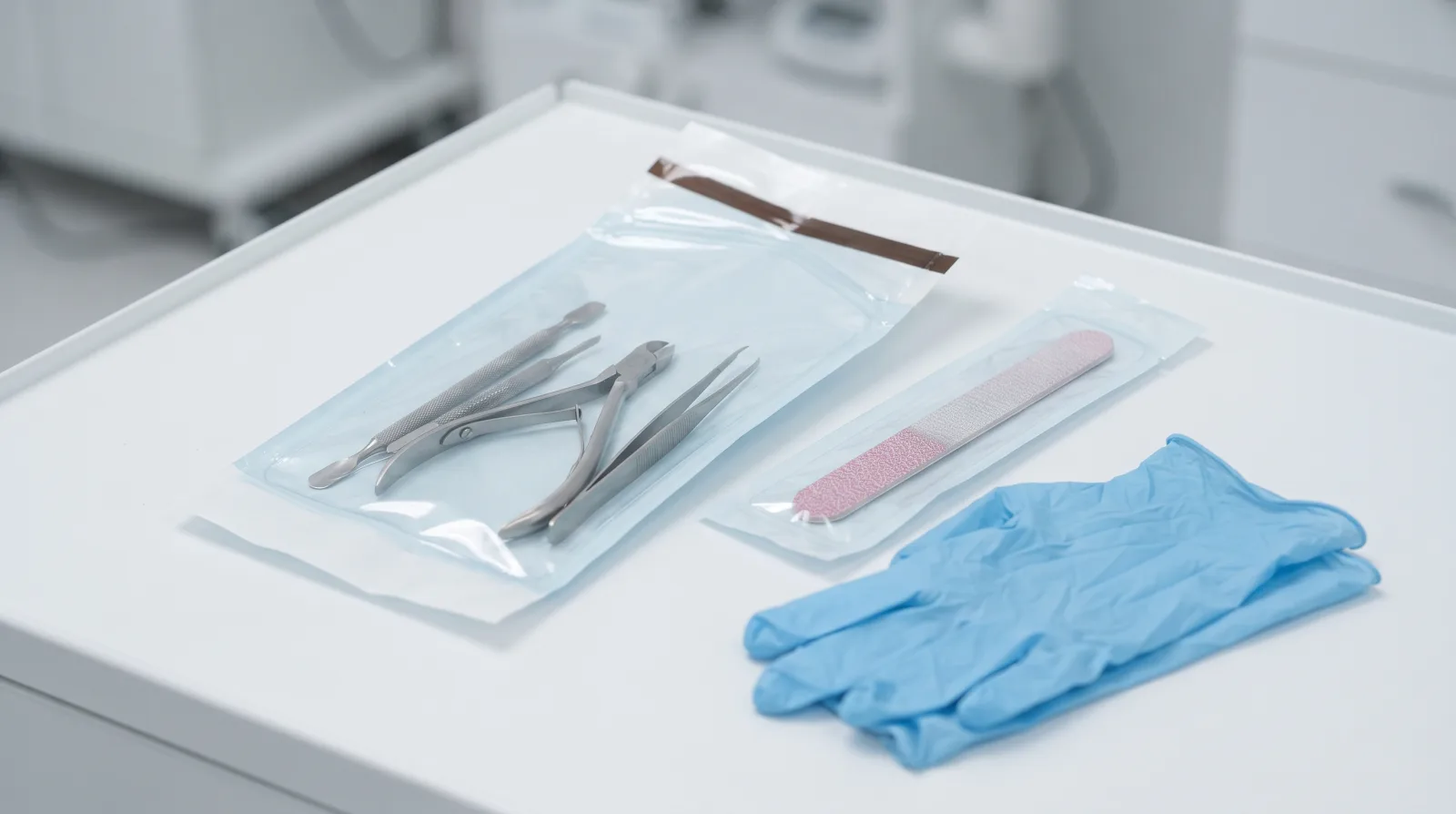
Metal cuticle nippers, pushers, and clippers must be sterilized in an autoclave between every client and stored in sealed sterilization pouches until use. If your tech grabs nippers from a drawer or a jar of "sanitizer," the tools haven't been properly sterilized. And these tools cut your skin during cuticle work.
6.Aggressive Cuticle Cutting
Your cuticle is a seal that protects the nail matrix from infection. A skilled technician pushes cuticles back gently and only trims dead skin. A rushed or untrained tech cuts the living cuticle aggressively, leaving open wounds where bacteria enter. Bleeding during a service is not normal.
7.Surprise Charges Added After the Service
A salon that "discovers" $30 in add-on charges after you sit down is using a known pricing tactic to inflate the ticket. Reputable salons publish full prices upfront, on the wall, the menu, or the website. Every add-on price is on our published menu.
The 5-Second Safety Check
When you walk into any nail salon, do this in the first 5 seconds before you sit down:
- Look for the license at the workstation you're being seated at. If absent, ask. If not produced, leave.
- Look at the pedicure basin. Plastic liner visible? Good. Empty basin? Ask if they're changing the liner.
- Look for sterilization pouches. Sealed pouches on the counter? Good. Tools loose in a drawer? Walk out.
- Smell the air. Fresh? Fine. Strong chemical sting that makes your eyes water? Ventilation is dangerously poor.
Questions to Ask Before You Book
A safe salon will answer all of these without hesitation:
- "How do you sterilize your tools between clients?"
- "Are your files single-use or reused?"
- "Do you use a new plastic liner in the pedicure basin?"
- "Are all your technicians Florida-licensed?"
- "What's the total price including add-ons?"
If you get vague answers, defensive responses, or "don't worry about it," find another salon.
What a Safe Salon Looks Like
At Trust Nails & Spa, every technician's Florida cosmetology license is posted at their station. Metal tools (cuticle nippers, pushers, clippers) are sterilized in an autoclave and stored in sealed sterilization pouches that we open in front of you. Files and buffers are single-use disposables, opened from new and discarded after your service. Every pedicure basin gets a fresh plastic liner. Every surface is wiped with EPA-registered disinfectant between clients. We've maintained these standards since 2021 because shortcuts are how clients get hurt.
For the full breakdown of what good sanitation looks like, see our deep-dive on nail salon sanitation standards. For our complete published pricing, see our price list.
What to Do If You Already Have an Infection
If you've recently visited a nail salon and developed any of the following symptoms, see a doctor (not your salon) immediately:
- Swelling, redness, or pus around the cuticle (paronychia)
- Green or black discoloration under the nail (pseudomonas / "green nail syndrome")
- Thickening, yellowing, or crumbling nail plate (fungal infection)
- Red streaks moving up the finger or toe (spreading infection, urgent)
- Boils, sores, or skin breakdown on the leg after a pedicure (mycobacterial infection)
Mild cases respond to topical treatment. Spreading or worsening infections need oral antibiotics or antifungals. Don't try to treat it yourself. See a doctor.
Frequently Asked Questions
How do I know if a nail salon is safe?
Look for these seven signs: visible state cosmetology licenses at each station, autoclave or UV sterilizer in the salon, sealed sterilization pouches opened in front of you, fresh disposable files for each client, new pedicure basin liners between clients, EPA-registered disinfectant (not soap), and clean ventilated salon air.
Can you get an infection from a nail salon?
Yes. The most common nail salon infections are bacterial (paronychia, pseudomonas / green nail syndrome), fungal (onychomycosis), and viral (warts, hepatitis from improperly sterilized cuticle tools). Risk is dramatically lower at salons that follow proper sanitation. Risk is highest at salons that reuse files, skip basin liners, or have unlicensed technicians.
What is the difference between sanitization and sterilization?
Sanitization reduces germs to safe levels using soap and disinfectants. Sterilization kills 100% of microorganisms using heat (autoclave) or chemicals (specialized solutions). Cuticle nippers, pushers, and other tools that touch skin should be sterilized between every client, not just sanitized.
Are nail salon files reusable?
No. Emery boards, buffing blocks, and disposable files are porous and cannot be sanitized. They must be discarded after a single client. Metal files can be sterilized in an autoclave between uses. If your salon pulls a file from a drawer of "used" files, walk out.
How can I check if a Kissimmee nail technician is licensed?
All Florida nail technicians must hold an active state cosmetology or nail-specialty license, posted at their workstation. You can also verify a license at the Florida Department of Business and Professional Regulation website (myfloridalicense.com).
3058 Dyer Blvd · Kissimmee, FL 34741
Safety First. Always.
Trust Nails & Spa has maintained hospital-grade sanitation standards since 2021. Visible licenses, sealed sterilization pouches, single-use files, fresh basin liners every client.